Most visitors to Istanbul plan their days around the Hagia Sophia, the Blue Mosque and the Grand Bazaar. Yet one of the oldest and most impressive monuments in the city stands in plain sight, with traffic flowing under its arches every minute of the day: the Aqueduct of Valens, known in Turkish as Bozdoğan Kemeri. For more than sixteen centuries this aqueduct has carried the story of how a great capital kept itself alive, and it is only a short walk from New Central Hotel in Laleli.
In this guide we explain what the aqueduct is, how it was built, how water travelled across Thrace to reach Constantinople, how to walk to the aqueduct from Laleli, and what you can combine it with on the same afternoon. Entry is free, the monument is open-air and you can visit at any hour, which makes it one of the easiest historic sights to add to an Istanbul itinerary.
What Is the Aqueduct of Valens?
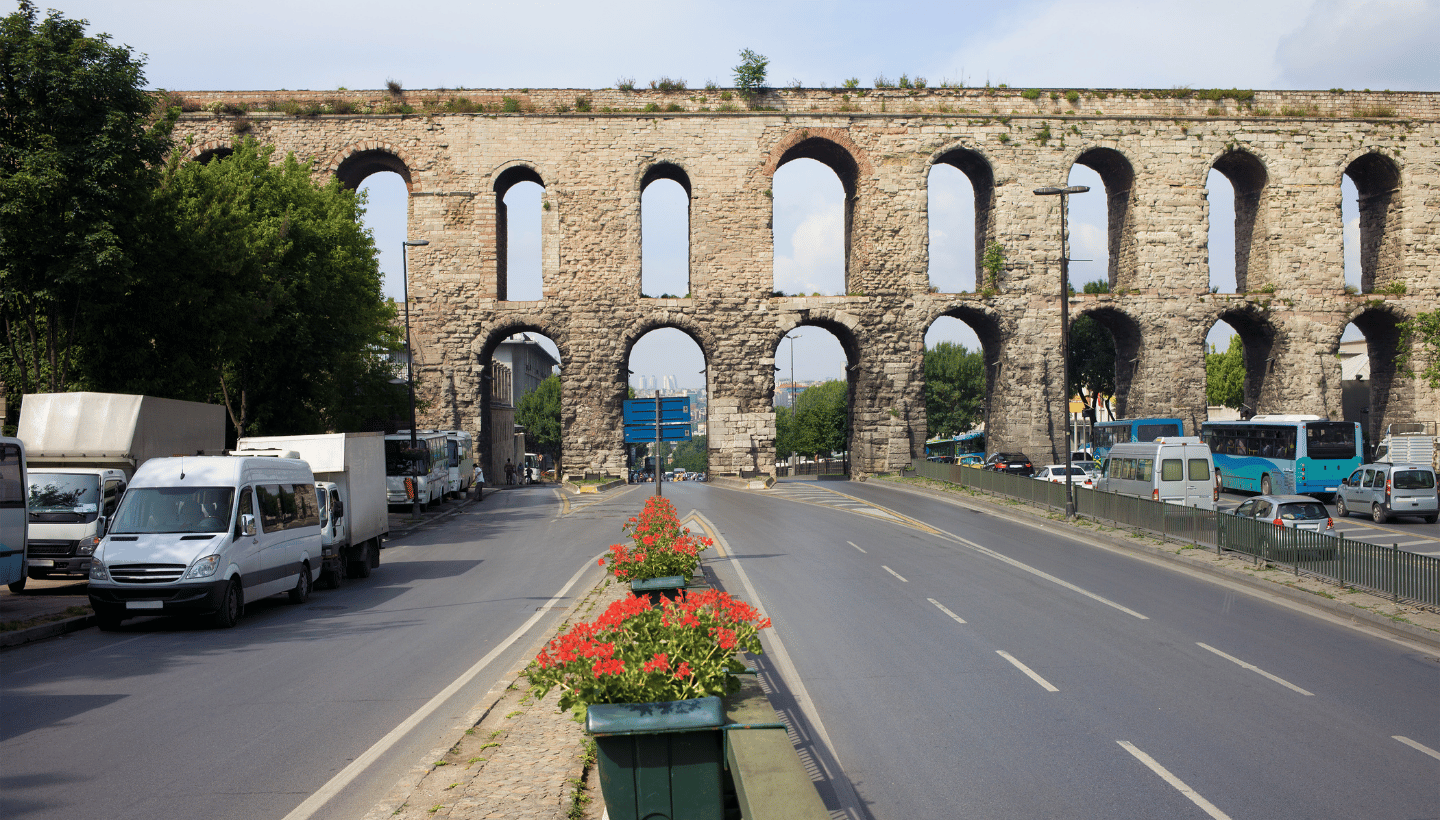
The Aqueduct of Valens is a monumental Roman water bridge that crosses the valley between two of Istanbul’s historic hills, the third hill (where Istanbul University and the Süleymaniye Mosque stand) and the fourth hill (crowned by the Fatih Mosque). It was the final, most visible section of a long water supply line that brought fresh water from the forests of Thrace into the heart of the city.
Today roughly 920 metres of the aqueduct survive, out of an original length of nearly one kilometre. At its highest point, where the valley is deepest, the double row of stone arches rises to around 29 metres. The structure is built from rough-cut stone blocks with bands of brick, a typical late Roman technique that has proved remarkably durable through earthquakes, fires and centuries of urban change.
What makes the aqueduct special is that it is not a ruin sitting in a fenced archaeological park. Atatürk Boulevard, one of the main avenues of the old city, passes directly beneath its arches, so the aqueduct is still part of daily life. Buses, taxis and pedestrians move through the same arches that Byzantine and Ottoman citizens walked past centuries ago.
A Short History: From Emperor Valens to the Ottomans
Constantinople was refounded as the new capital of the Roman Empire in 330 AD, and its population grew quickly. The peninsula, however, had no large river and only limited springs. Supplying water became one of the most urgent engineering problems of the new capital. Work on a major water line began in the decades after the city’s foundation, and the aqueduct was completed in 368 AD during the reign of Emperor Valens, whose name it still carries.
Throughout the Byzantine era the aqueduct was repaired many times. Emperors such as Justinian and later rulers restored damaged arches after earthquakes and sieges, because without it the city’s cisterns, public baths, fountains and palaces could not function. When the Ottomans conquered the city in 1453, they quickly recognised the value of the old system. Sultan Mehmed II had the aqueduct repaired, and in the sixteenth century the great architect Mimar Sinan worked on the water network that fed it under Süleyman the Magnificent. Further restorations followed, including a major repair at the end of the seventeenth century.
The aqueduct remained in use well into the Ottoman period, supplying water to districts on the historic peninsula and to the Topkapı Palace area. It was only with modern water systems in the late nineteenth and twentieth centuries that it lost its original function. In the 1940s, when Atatürk Boulevard was opened, the aqueduct was preserved and the new road was routed underneath it, which is why it stands so dramatically above the traffic today.
How Water Reached Constantinople
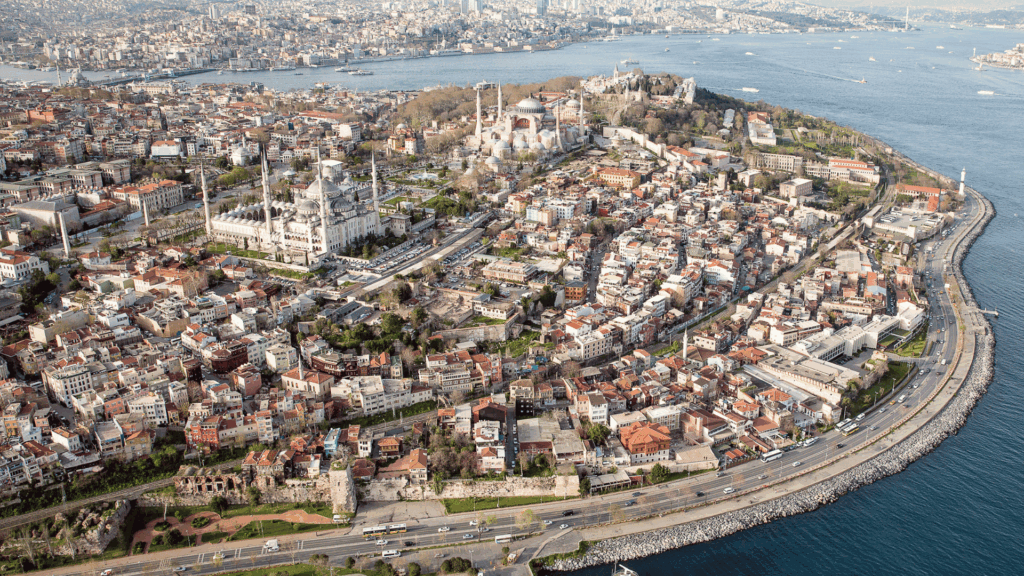
The aqueduct you see in Fatih is only the last link in a much longer chain. Water was collected from springs and streams in the hills of Thrace, far to the west of the city, and carried through stone channels, tunnels and smaller bridges for well over a hundred kilometres. Later extensions made the combined Byzantine water network one of the longest supply systems of the ancient world, with channels stretching for hundreds of kilometres in total.
The system worked entirely by gravity. Engineers had to keep a gentle, constant slope over enormous distances, so that water would flow steadily without stagnating or rushing too fast. When the channel reached a valley, it needed a bridge to keep its level, and that is exactly the role of the Aqueduct of Valens: it allowed water to cross the dip between two hills and continue towards the centre of the city.
Once inside the walls, water was stored in huge cisterns. The Basilica Cistern near Sultanahmet, the Binbirdirek Cistern and several large open-air reservoirs held reserves for dry summers and for times of siege. If you have already explored the monuments around Sultanahmet, our guide to the top 10 must-see landmarks near Sultanahmet will help you connect the aqueduct with the cisterns it once fed.
Walking to the Aqueduct from Laleli
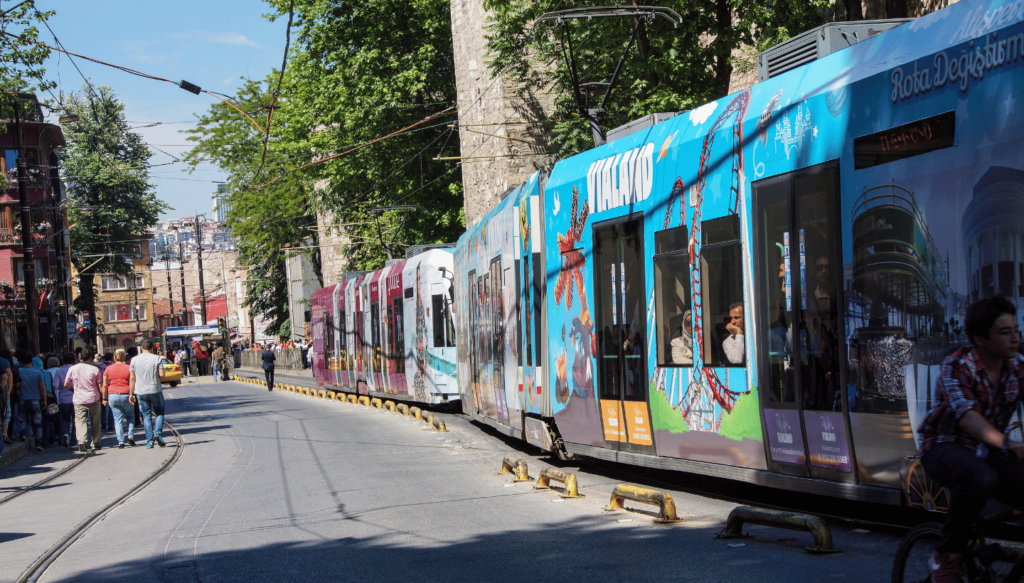
One of the advantages of staying in Laleli is that the aqueduct is within comfortable walking distance. From New Central Hotel, the walk takes around 15 to 20 minutes at a relaxed pace. Head towards Atatürk Boulevard and follow it north; as you approach the Saraçhane area, the long line of arches appears ahead of you, framed by plane trees and the domes of the Şehzade Mosque.
If you prefer public transport, the T1 tram stops at Laleli-Üniversite and Beyazıt, and the M2 metro station at Vezneciler is also close by. From either point, the aqueduct is a short stroll away. Our guide to public transportation in Istanbul explains how to use the Istanbulkart and which lines are the most useful for visitors.
For the best first impression, approach the aqueduct along the pedestrian paths of Saraçhane Park. From there you can see the full length of the arches stepping down towards the Golden Horn side, and you get a clear sense of how the structure bridges the valley. Crossing the boulevard requires care, so always use the pedestrian crossings and underpasses.
What to See Around the Aqueduct
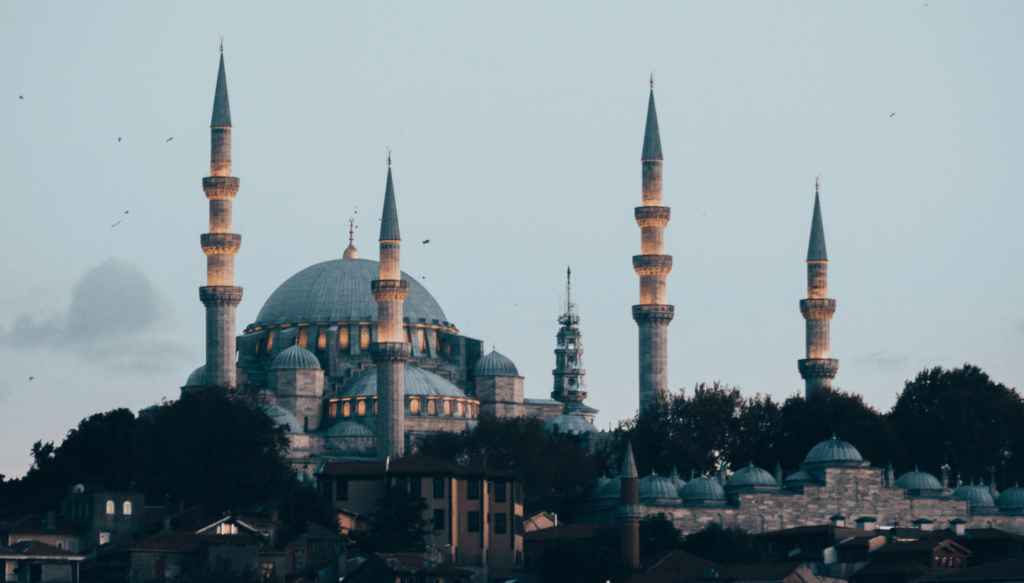
The area around the aqueduct is full of interesting places, and many of them are rarely crowded. Here are a few that pair well with a visit:
- Şehzade Mosque: Built by Mimar Sinan in the 1540s in memory of Prince Mehmed, a son of Süleyman the Magnificent, this mosque stands right next to the aqueduct. Sinan himself called it his “apprentice work”, but its harmonious dome and peaceful courtyard are a pleasure to visit.
- Süleymaniye Mosque: A ten- to fifteen-minute walk away, Sinan’s masterpiece dominates the skyline above the Golden Horn. Read our detailed Süleymaniye Mosque visitor’s guide before you go.
- Kadınlar Pazarı (Women’s Market): Just beneath the arches on the Fatih side, this small square is famous for restaurants serving dishes from southeastern Turkey, such as slow-roasted büryan lamb and perde pilavı, a rice pie baked in a thin pastry crust. It is a lively, authentic place for lunch after seeing the aqueduct.
- Fatih Mosque: Further up the fourth hill, the mosque complex of Sultan Mehmed II offers a glimpse into a more local, residential side of the old city.
- Saraçhane Park: A green space with benches and views of the arches, ideal for a short rest and photos.
Combining the aqueduct, Şehzade and Süleymaniye makes a rewarding half-day walk, and it also shows you a quieter side of the historic peninsula. For more ideas within walking distance of the hotel, see our list of top attractions near Laleli.
Tips for Visiting and Photographing the Aqueduct
Because the aqueduct is an open-air monument with no ticket office, you can visit whenever it suits your plans. Still, a few practical tips will make the experience better:
- Best light: Late afternoon light warms the stone and brings out the texture of the arches. Early morning is quieter, with less traffic beneath the aqueduct.
- Best viewpoints: Saraçhane Park gives a long side view. Standing on the central reservation of Atatürk Boulevard (only where it is safe and permitted) lets you photograph traffic passing through the arches, a classic Istanbul contrast of old and new.
- Do not climb: Walking on top of the aqueduct is not allowed and is dangerous. Enjoy the structure from ground level.
- Wear comfortable shoes: The surrounding streets are hilly and some pavements are uneven.
- Season: Spring and autumn are ideal. In October the temperatures are mild and the plane trees around Saraçhane begin to change colour, which makes the aqueduct even more photogenic. Our article on the best time to visit Istanbul covers each season in detail.
Plan around one to two hours if you want to see the aqueduct, visit the Şehzade Mosque and have a relaxed lunch at Kadınlar Pazarı. If you add Süleymaniye, allow half a day.
Making Laleli Your Base for Exploring the Old City
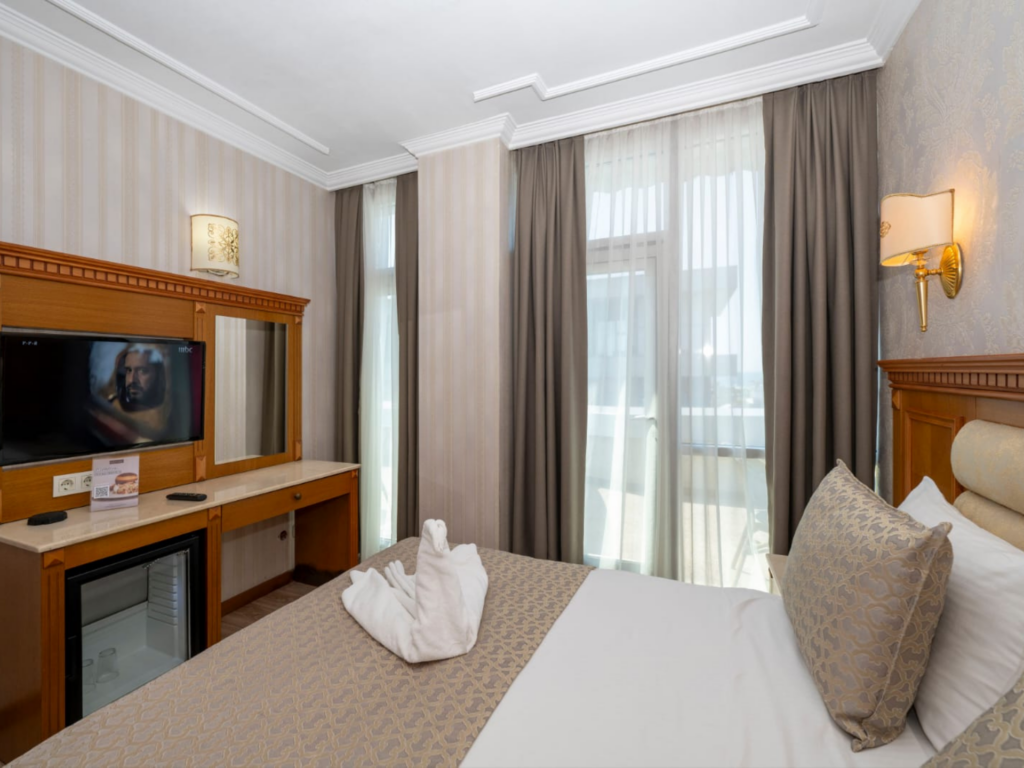
Laleli sits in the middle of the historic peninsula, between Aksaray and Beyazıt. From here, the aqueduct, the Grand Bazaar, the Süleymaniye Mosque and the monuments of Sultanahmet are all reachable on foot or with a few tram stops. Staying in Laleli means you can see the aqueduct in the soft evening light, return to your room to rest, and still be close to restaurants and shops.
New Central Hotel offers comfortable rooms, a generous breakfast and a friendly team that is happy to help you plan your routes around the old city. If you are new to the neighbourhood, our ultimate guide to exploring Laleli introduces the area’s streets, markets and landmarks.
A good plan is to dedicate one morning to Sultanahmet, one afternoon to the Grand Bazaar and Beyazıt, and another afternoon to the aqueduct, Şehzade and Süleymaniye. This way you experience three very different faces of the historic peninsula without long transfers.
Frequently Asked Questions
Is there an entrance fee for the Aqueduct of Valens?
No. The aqueduct is an open-air monument and can be seen free of charge at any time of day.
How old is the aqueduct?
The aqueduct was completed in 368 AD under Emperor Valens, which makes it more than 1,650 years old. It was repaired many times by both Byzantine emperors and Ottoman sultans.
How far is the aqueduct from New Central Hotel?
It is roughly a 15 to 20 minute walk from the hotel in Laleli, depending on your pace and route.
Can I walk on top of the aqueduct?
No. Climbing or walking on the aqueduct is not permitted. The best way to enjoy it is from Saraçhane Park and the surrounding streets.
What else is near the aqueduct?
The Şehzade Mosque, Kadınlar Pazarı, Saraçhane Park, the Fatih Mosque and the Süleymaniye Mosque are all close by, making it easy to plan a full afternoon in the area.
Final Thoughts
The Aqueduct of Valens is one of those places that quietly changes how you see Istanbul. Standing beneath its arches, you understand that the city’s grandeur depended not only on palaces and domes, but also on the engineering that brought water across valleys and hills. It is free, easy to reach and full of history, and it rewards anyone who takes a short detour from the busiest sights. If you are staying with us in Laleli, add the aqueduct to your plans: it is one of the closest and most memorable landmarks on your doorstep.